

There’s a particular energy that comes with an advocacy day on Parliament Hill.
Organizations arrive in Ottawa with carefully prepared briefing materials, clear priorities, and a schedule packed with meetings. Leaders and advocates move between parliamentary offices, sharing their stories, making their case, and hoping their message resonates with the people who can help move their priorities forward.
For many organizations, securing those meetings represents months of preparation and coordination, and there is a sense of accomplishment even before the conversations start. And rightly so. Getting in front of decision-makers is an important achievement.
But there’s something I often remind organizations about government relations:
The meeting itself isn’t the outcome. It’s the beginning of an opportunity.
I’ve spent much of my career helping organizations navigate government, build relationships, and advance their priorities. One of the most important lessons I’ve learned is that meaningful advocacy rarely happens in a single conversation.
So, once you’ve left Parliament Hill, packed away your briefing notes, and returned to the day-to-day demands of running your organization, what happens next?
It happens through consistent engagement, thoughtful follow-up, and the ability to turn an initial discussion into a relationship that creates value for both sides.
That’s where the real work begins.
A Good Meeting Doesn’t Always Mean Immediate Results
It’s natural to leave a productive government meeting feeling optimistic.
Perhaps an MP expressed support for your organization’s work. A minister’s office asked thoughtful questions. A departmental official acknowledged a challenge you’ve been raising for months.
Those are encouraging signs.
But it’s important to distinguish between a positive conversation and a concrete commitment.
Government decision-making is complicated. Even when an elected official genuinely supports your priorities, there may be budgetary constraints, competing policy objectives, jurisdictional considerations, or internal processes that influence what happens next.
And sometimes, the person you’re meeting with isn’t the person who ultimately makes the decision.
That doesn’t make the conversation any less valuable.
In fact, one of the biggest mistakes organizations can make is measuring the success of their advocacy solely by whether they receive an immediate yes.
Progress in government relations is often incremental.
A productive meeting might mean a decision-maker now understands your issue more clearly. It might mean your organization has been connected with the right departmental official. It might mean you’ve learned something important about the government’s priorities or the barriers standing in your way.
Those developments may not make for an exciting headline, but they can be the foundation of a much larger policy win.
The key is recognizing their value and knowing what to do with them.
The Most Important Part of a Meeting Might Be What You Learn
Organizations understandably spend considerable time preparing what they want to say to government.
They develop key messages, assemble evidence, identify their asks, and rehearse how to communicate their priorities within a limited meeting window.
All of that preparation matters.
But effective advocacy requires just as much listening as it does talking.
When I meet with government representatives, I’m interested not only in how they respond to a proposal, but also in what their questions and comments reveal.
What challenges are they focused on? What concerns do they raise? Are there other departments, stakeholders, or levels of government involved? Is there an upcoming policy process or decision that could create an opportunity for further engagement?
Sometimes, a meeting doesn’t produce the answer you were hoping for, but it provides information that fundamentally improves your strategy.
That information is valuable.
It’s why I encourage organizations to take the time, immediately after a meeting, to capture more than just who attended and what was discussed.
Think about what you learned.
Did the conversation confirm your assumptions? Did it reveal a new opportunity? Did it suggest your proposal needs to be framed differently?
Those insights should inform what happens next.
Follow-Up Should Move the Conversation Forward
Most organizations understand the importance of sending a thank-you email after a government meeting.
It’s professional, courteous, and an important part of maintaining relationships.
But a thoughtful follow-up should do more than express appreciation.
It should create a reason for the conversation to continue.
If you committed to sharing additional information, send it. If a decision-maker expressed interest in a particular aspect of your work, provide a concise, relevant resource. If the discussion identified a possible next step, confirm who will be responsible for moving it forward.
And if the meeting revealed that your original ask wasn’t quite aligned with the government’s current priorities, consider how you might refine your approach.
The goal isn’t to overwhelm someone with more information.
It’s to demonstrate that your organization is responsive, credible, and serious about contributing to a solution.
One of the most effective things you can do after a meeting is make it easy for the person on the other side of the table to understand what you’re asking them to do next.
That might be reviewing a short briefing note, facilitating an introduction, considering a policy recommendation, or keeping your organization informed as a particular initiative develops.
Whatever it is, be clear and realistic.
A good follow-up doesn’t simply remind someone that you met. It gives them a reason to keep engaging.
Relationships Are Built Between the Big Moments
Advocacy days, conferences, budget announcements, and major policy consultations are important opportunities to engage government.
But they shouldn’t be the only times decision-makers hear from your organization.
One of the most valuable things an organization can do is develop relationships that extend beyond a particular funding request or policy campaign.
That doesn’t mean constantly requesting meetings or filling inboxes with updates.
It means becoming a trusted source of information and expertise.
If your organization works on housing, for example, you may have firsthand knowledge about barriers to development, service delivery challenges, or emerging community needs.
If you work in recreation, health care, workforce development, or Indigenous economic development, you likely have insights that can help government understand how policies are working on the ground.
That experience has value.
Sharing it constructively, even when you aren’t asking for something, helps establish your organization as a knowledgeable partner.
And over time, those relationships can create opportunities that wouldn’t necessarily emerge from a single meeting.
You may be invited to participate in a consultation, provide feedback on a proposed program, or contribute expertise to a policy discussion.
Those opportunities often develop because you’ve demonstrated that your organization has something useful to contribute.
The strongest government relationships aren’t built around a single ask. They’re built around ongoing trust and mutual understanding.
Collective Advocacy Creates Opportunities, Too
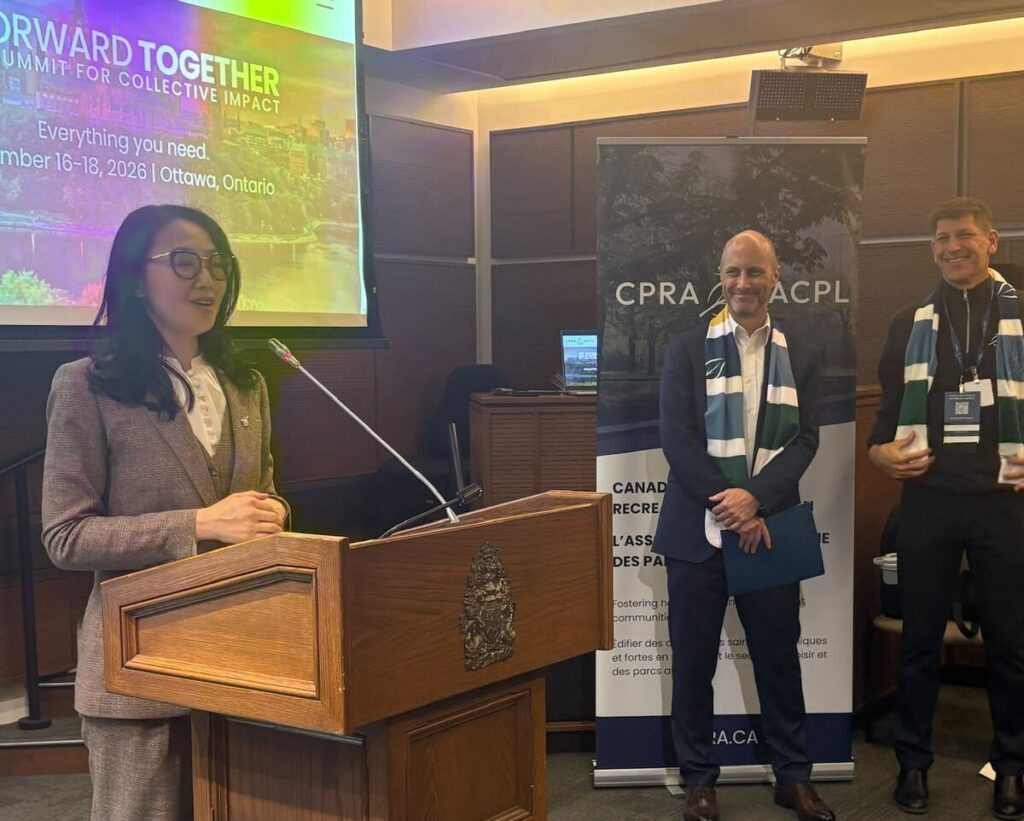
This week, the Canadian Parks and Recreation Association (CPRA), a partner organization of Homeward Public Affairs, brought recreation and parks leaders together on Parliament Hill for a national advocacy effort.
With approximately 160 delegates participating and more than 30 meetings with federal representatives, the initiative demonstrated the scale of engagement that can be achieved when organizations come together around shared priorities.
There’s real value in that kind of coordinated advocacy.
When organizations from different communities and regions communicate a consistent message, they help demonstrate that an issue extends beyond a single organization or constituency.
They also bring different perspectives, experiences, and examples to the conversation.
But the value of collective advocacy doesn’t end when the meetings conclude.
The next opportunity is to build on what participants learned, identify where messages resonated, understand the questions raised by government representatives, and determine how the sector can continue advancing its priorities together.
A coordinated advocacy day can open doors.
Sustained, coordinated engagement is what helps keep them open.
Measuring What Matters
For organizations investing time and resources in government relations, it’s reasonable to ask whether those efforts are producing results.
Boards want to understand the value of advocacy. Executive directors need to make decisions about where to invest limited organizational capacity. Teams want to know whether their work is making a difference.
Those are fair questions.
But measuring government relations exclusively through immediate funding announcements or policy changes can create an incomplete picture.
Meaningful progress may include developing a relationship with a key decision-maker, gaining a better understanding of a policy process, securing an opportunity to provide input, building a stronger coalition, or seeing your organization’s recommendations reflected in a broader conversation.
None of those developments guarantees a particular outcome.
But each can represent movement in the right direction.
I encourage organizations to think about advocacy success in terms of both immediate activities and longer-term progress.
Did you reach the right people? Did you communicate a clear and compelling message? Did you learn something that strengthens your strategy? Did the conversation create an opportunity for further engagement?
And perhaps most importantly, are you closer to achieving your organization’s underlying objective than you were before?
Those are the questions worth asking.
The Real Work Begins After the Meeting
There’s no question that getting your organization in front of government decision-makers matters.
Those conversations can raise awareness, build understanding, challenge assumptions, and create opportunities to advance important priorities.
But the organizations that make the greatest progress are rarely those that simply secure the most meetings.
They’re the ones that approach each conversation as part of a broader strategy.
They listen carefully. They follow through on commitments. They maintain relationships. They adapt their approach as circumstances change.
And they understand that government relations is not a series of isolated meetings, but an ongoing process of building credibility, identifying opportunities, and advancing meaningful change.
So, the next time your organization leaves Parliament Hill after a busy day of meetings, take a moment to recognize what you’ve accomplished.
Then ask yourself one more question:
What are we going to do with the opportunities those conversations have created?
Because the real measure of a successful meeting isn’t simply what happened in the room.
It’s what happens next.